
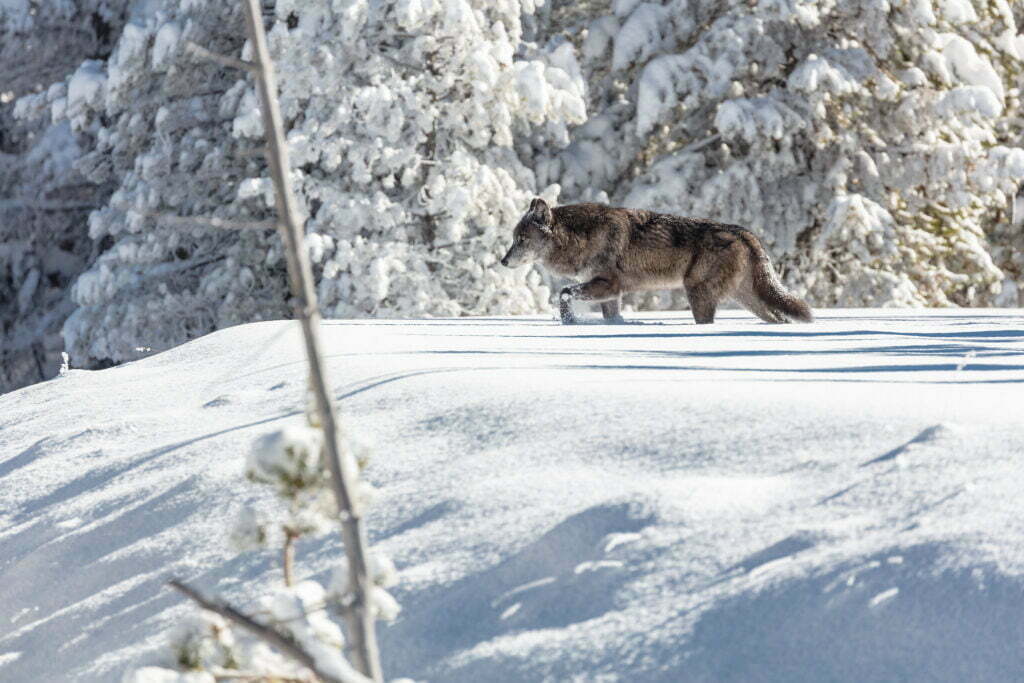
A Short History of Yellowstone Wolves
The story of Yellowstone wolves, indeed wolves across most of the American West, is a story of misunderstanding, extermination, rebirth, and continued controversy. From their extirpation in Yellowstone to their reintroduction wolves have been a focal point for several contentious issues. Woven into their story we find the emergent conservation movement, struggles between ranchers and the wild lands they settled, and a case study on the futile attempts of federal and park officials to preserve Yellowstone while simultaneously destroying that which made it wild.
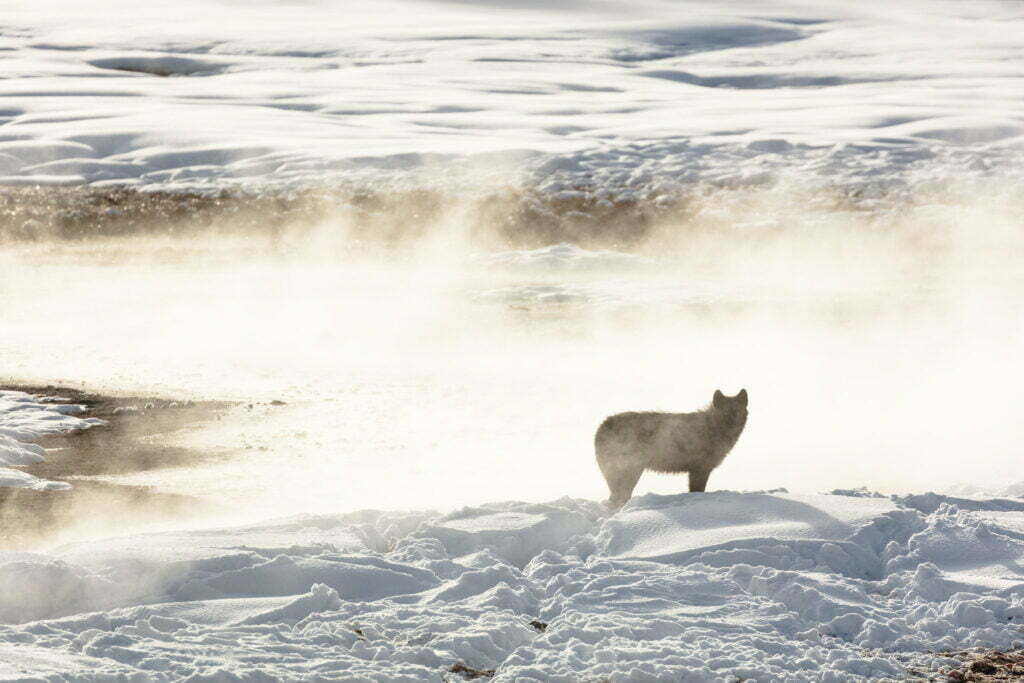
Extirpation of the Gray Wolf
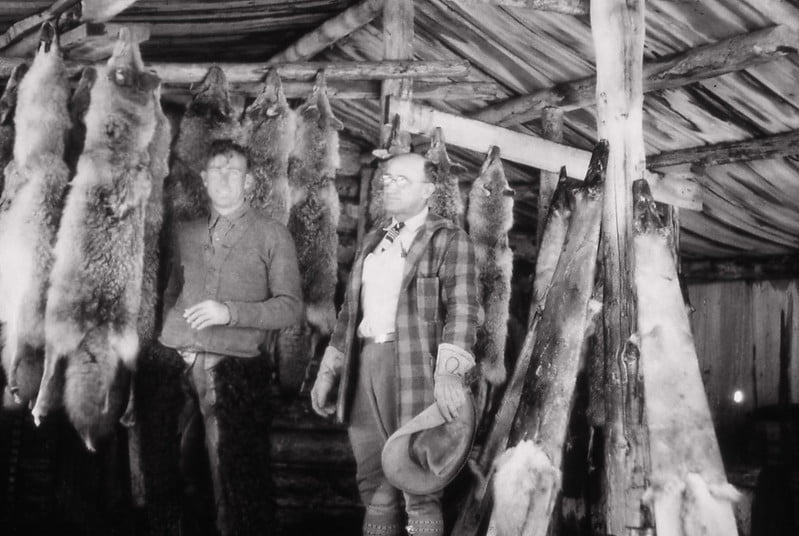
When Yellowstone was founded in 1872, no legal protections for wildlife in the park were established. Visitors and park officials alike were allowed to kill game within the park until 1883 when regulations prohibiting the hunting of most wildlife in the park were issued. Left out of these protections were bears, mountain lions, coyotes, and wolves. By 1914, the U.S. Army began killing wolves.
In 1926, the last officially documented wolves in Yellowstone, two pups near Soda Butte, were killed by Park Rangers. This final regretful killing was but one event in a decades-long endeavor to eliminate the gray wolf from the entire American West. Wolves were then, and in many places still are, considered a nuisance, a danger, and undesirable. Wolves were seen as a threat to ranchers’ cattle, to elk that humans intended to hunt, and even as a threat to humans directly. There were once as many as 2 million wolves in North America, with a range stretching from Alaska down into Mexico. By the mid-1900s, however, wolves had been almost eliminated from the continental United States.
This final regretful killing was but one event in a decades long endeavor to eliminate the gray wolf from the entire American West. Wolves were then, and in many places still are, considered a nuisance, a danger, and undesirable.
It was thought in those times that the elimination of wolves and other large predators, including bears, mountain lions, and coyotes, would lead to a healthier Yellowstone. Park managers considered the large ungulates like elk to be the primary wildlife draw within the park. They believed wolves preying on elk were seen as damaging to Yellowstone. With the benefit of hindsight, we now know how misconceived this perspective was.
Effect of Extermination of Yellowstone Wolves
After wolves had been eliminated across Yellowstone, elk populations began an explosive growth in numbers. Overgrazing became a major issue as massive herds of elk reduced the abundance of several species of grass and small trees, such as aspen. The effects of this abundance of elk caused a trophic cascade, or a series of indirect ecological impacts, which massively degraded the quality of the ranges in Yellowstone. The decrease in vegetation on riverbanks led to erosion, widening the rivers. River temperatures also began to rise due to the decreased shading, and the abundance of fish species began to change. Multiple species of songbirds had their habitats decimated by the destruction of trees they frequently used for nesting, and beavers disappeared from the park as willow populations declined.
By 1933, scientists in the park began to note this decline in the quality of the ecosystem. Attempts to relocate or cull the elk population were undertaken, which did succeed in preventing further degradation but did nothing to remedy the damage already done. The notion of wolf reintroduction was entering the discourse by the 1940s but gained little steam after such a successful extermination program. In the 1960s complaints of too few elk from local hunters led Congress to pressure the park to stop killing elk in Yellowstone. The cycle of destruction began again as elk populations began their climb to their greatest numbers recorded in park history.
[T]he Endangered Species Act mandated the U.S Fish and Wildlife Service to create plans to restore species listed as endangered, setting into motion the return of wolves to Yellowstone.
It was at this same time, in the 1960s, that a broader understanding of the dynamics and interplay between species in ecosystems was emerging, and alongside it a growing conservation movement. With the passage of the Endangered Species Preservation Act of 1966 and the Endangered Species Act of 1973 wolves finally gained legal protection under federal law. Further, the Endangered Species Act mandated the U.S Fish and Wildlife Service to create plans to restore species listed as endangered, setting into motion the return of wolves to Yellowstone.
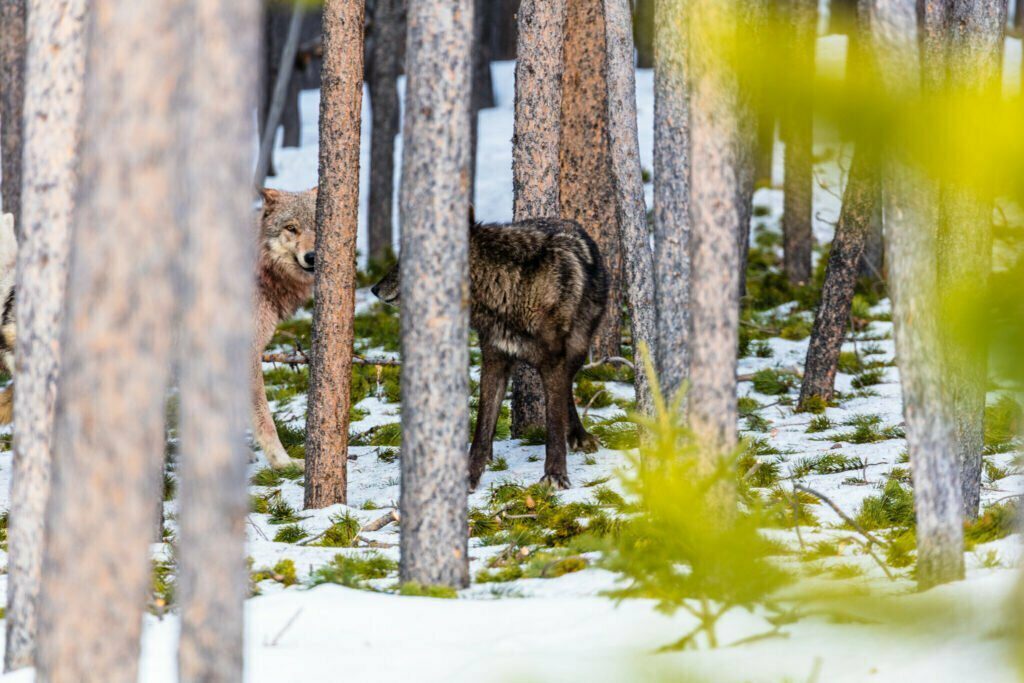
Reintroduction of Yellowstone Wolves
In January of 1995, following decades of research, impact assessments, and contentious debate, wolves were finally reintroduced into Yellowstone National Park. Between 1995 and 1997, 41 wolves were introduced into Yellowstone National Park. These wolves, captured by American and Canadian officials in Canada and Northwest Montana, were the first wolves officially noted inside the park boundaries since 1926.
Wolf populations immediately began to steadily rise, and their numbers, habits, and behaviors were closely monitored by scientists within the park. Elk populations, as anticipated, began to decline leading to increases in the prevalence of various plants including willows, cottonwoods, and aspen. It is important to note though, that the influence of wolves in the decline in elk numbers is but one among many variables affecting elk populations. Within two years of wolf reintroduction, coyote populations declined by 50% due to increased competition and predation by wolves. Coyote populations have since rebounded, but a lasting impact wolves have had on coyotes is their influence on their behavior and pack dynamics. Coyotes began living in smaller packs, typically only a breeding pair and their pups of the year, in contrast to the larger more multi-generational packs they had lived in before wolf reintroduction.Wolves are now considered a keystone species, or a species with such profound effects on am ecosystem that it is considered critical to the survival of other species in the system.
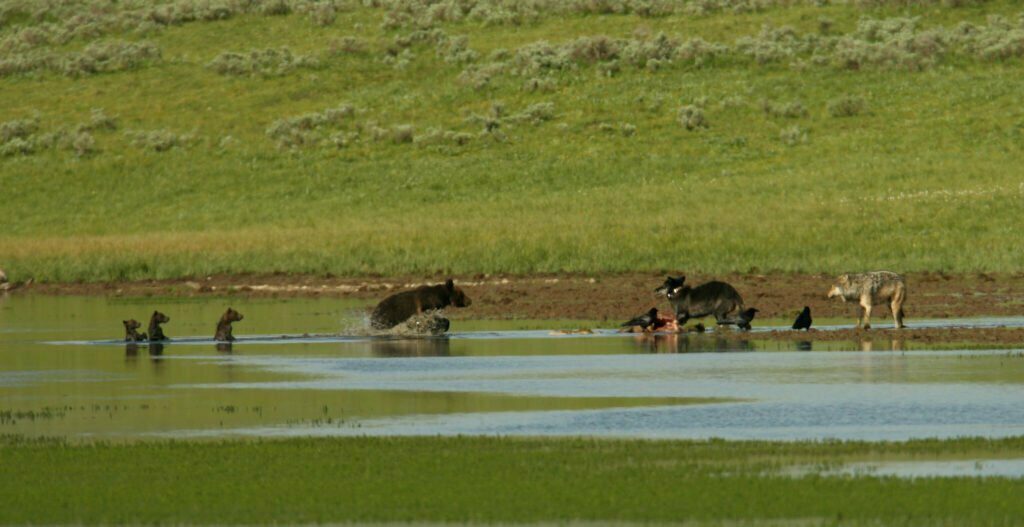
The populations of beaver also began to recover as their habitat began to recover. Beavers, in turn, began affecting their habitat, building dams that regulate the intensity of seasonal runoff, help regulate water temperature, and prevent erosion. The increasing number of elk kills also benefited Yellowstone’s grizzly bears, which will often run wolves off of their kills. The increasing number of wolf-killed elk carcasses also benefited other scavengers such as bald and golden eagles, ravens, magpies, and coyotes.
All of these ecological changes were closely monitored by scientists and provided a trove of information on wolves, unlike anything that had existed prior. Wolves are now considered a keystone species, or a species with such profound effects on an ecosystem that it is considered critical to the survival of other species in the system.
Continuing Controversy
In 2008, the U.S. Fish and Wildlife Service removed gray wolves in Montana, Idaho, and Wyoming from the endangered species list. This change was opposed by many conservationists, but wolf hunting in Montana began in 2009. Following this change, wolves leaving Yellowstone were subjected to hunting by humans, leading to a new crisis in the effort to reintroduce wolves to Yellowstone. This crisis was confounded by wolves being returned to the endangered species list in 2009 due to legal challenges, again delisted in Montana and Idaho in 2011, and delisted in Wyoming in 2012. Wolves in Wyoming were relisted in Wyoming in 2014 before finally being delisted again in 2017. This whiplash is indicative of the very real controversy surrounding the status of wolves in the Northern Rocky Mountains.
Wolves are still fiercely disliked by many Montanans North of the Park and many state officials. Continued conflict over the management of wolves both in and around Yellowstone is a near certainty.
The issue reached a fever pitch when, after changes to wolf hunting regulations in Montana, 25 Yellowstone wolves, including 19 in Montana, were killed. Idaho, in the same time period, adopted a measure to eliminate 90% of its wolf population. North of Yellowstone, hunting parties of as many as 20 would scout the areas just on the border of the park for wolves. Unconfirmed reports indicate they used elk and horse carcasses and recordings of wolf howls to attract wolves. Trapping and snaring were also utilized in the killing of wolves outside Yellowstone. By the end of the hunting season, one-third of Yellowstone’s wolves had been killed outside the park in Montana, Idaho, and Wyoming. One pack, the Phantom Lake Pack, was completely eliminated. Park officials and conservationists were outraged, viewing the continuation of this state of affairs as unacceptable.
Following public outcry over the incredible number of Yellowstone wolves killed outside the park, a new quota of six wolves killed per season in the hunting management zone directly North of Yellowstone was instated in August of 2022. As things stand today, this compromise is holding. Wolves are still fiercely disliked by many Montanans North of the Park and many state officials. Continued conflict over the management of wolves both in and around Yellowstone is a near certainty.
Read More

Exploring Yellowstone in the Winter
The vast majority of the park’s annual visitors come during the much milder summer months, leaving the park to the die-hard Yellowstone admirers throughout the winter. This absence of visitors makes exploring Yellowstone in the winter a unique and rewarding experience.

The Yellowstone Volcano Erupted More Recently Than You Think
The Yellowstone Volcano Erupted More Recently Than You Think The geologic history of the land underlying Yellowstone National Park is defined by the influence of

How to Stay Safe in Bear Country
Here’s a short guide on how to stay safe from Yellowstone bears while visiting America’s first national park.
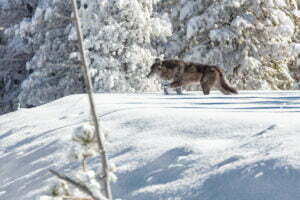
A Short History of Wolves in Yellowstone
A Short History of Yellowstone Wolves The story of Yellowstone wolves, indeed wolves across most of the American West, is a story of misunderstanding, extermination,
Is The Yellowstone Volcano About to Erupt?
Is The Yellowstone Volcano About to Erupt? Suddenly, as if out of nowhere, the ground shakes and buckles under Yellowstone National Park. Steam bellows out
5 Reasons You Should Visit Yellowstone
Five Reasons You Should Visit Yellowstone Whether you’re on a family vacation, a road trip with friends, or just out to explore the country, Yellowstone